Spend enough time around the Iowa Great Lakes and you'll start to notice something interesting. Nearly everyone has a story.
Some families have been coming to Okoboji for generations. Others remember learning to waterski on West Lake, spending summers at the same cabin, or bringing their kids to the same places their grandparents once visited.
That connection is what makes Iowa Great Lakes history so fascinating. The lakes are not just a vacation destination. They are part of the traditions, memories, and stories that have been passed down for well over a century.
However, the story begins much earlier than most people realize.
Iowa Great Lakes History Begins with Ice
Long before there were boats, beaches, or lake homes, enormous glaciers covered much of the Midwest.
As those glaciers slowly retreated, they carved depressions into the landscape and left behind massive amounts of sediment. Eventually, melting ice filled those basins, creating the chain of lakes we know today.
As a result, West Okoboji Lake became one of the most unique lakes in Iowa. Its remarkable depth and water clarity still reflect its glacial origins thousands of years later.
Meanwhile, neighboring lakes such as East Okoboji Lake and Big Spirit Lake developed their own identities, helping shape the region that visitors enjoy today.
Long Before Summer Tourism
Although many people associate Okoboji with vacations, the lakes were important long before tourism arrived.
For generations, Native American tribes lived, hunted, fished, and traveled throughout the region. The Dakota Sioux were among the tribes most closely connected to the area.
Because the lakes provided fresh water, wildlife, transportation routes, and natural resources, they became an important gathering place on the prairie.
Even today, understanding this chapter of Iowa Great Lakes history helps provide a broader perspective on the region and the people who called it home long before modern development.
The Event That Changed the Region
Every destination has defining moments. For the Iowa Great Lakes, one of those moments occurred in 1857.
The Spirit Lake Massacre remains one of the most significant events in Iowa history.
While the event was tragic for everyone involved, it also became a turning point in the settlement of northwest Iowa. Consequently, increased attention and migration helped accelerate development throughout the region.
Today, visitors can learn more about this chapter through local historical resources and museums around the lakes area.
When People Started Vacationing in Okoboji
By the late 1800s, word was spreading about the beauty of the Iowa Great Lakes.
At the same time, railroads were expanding across the Midwest. Suddenly, reaching Okoboji became much easier.
Families from Iowa, Minnesota, Nebraska, and South Dakota began arriving to enjoy the fresh air, clear water, and recreational opportunities that the lakes provided.
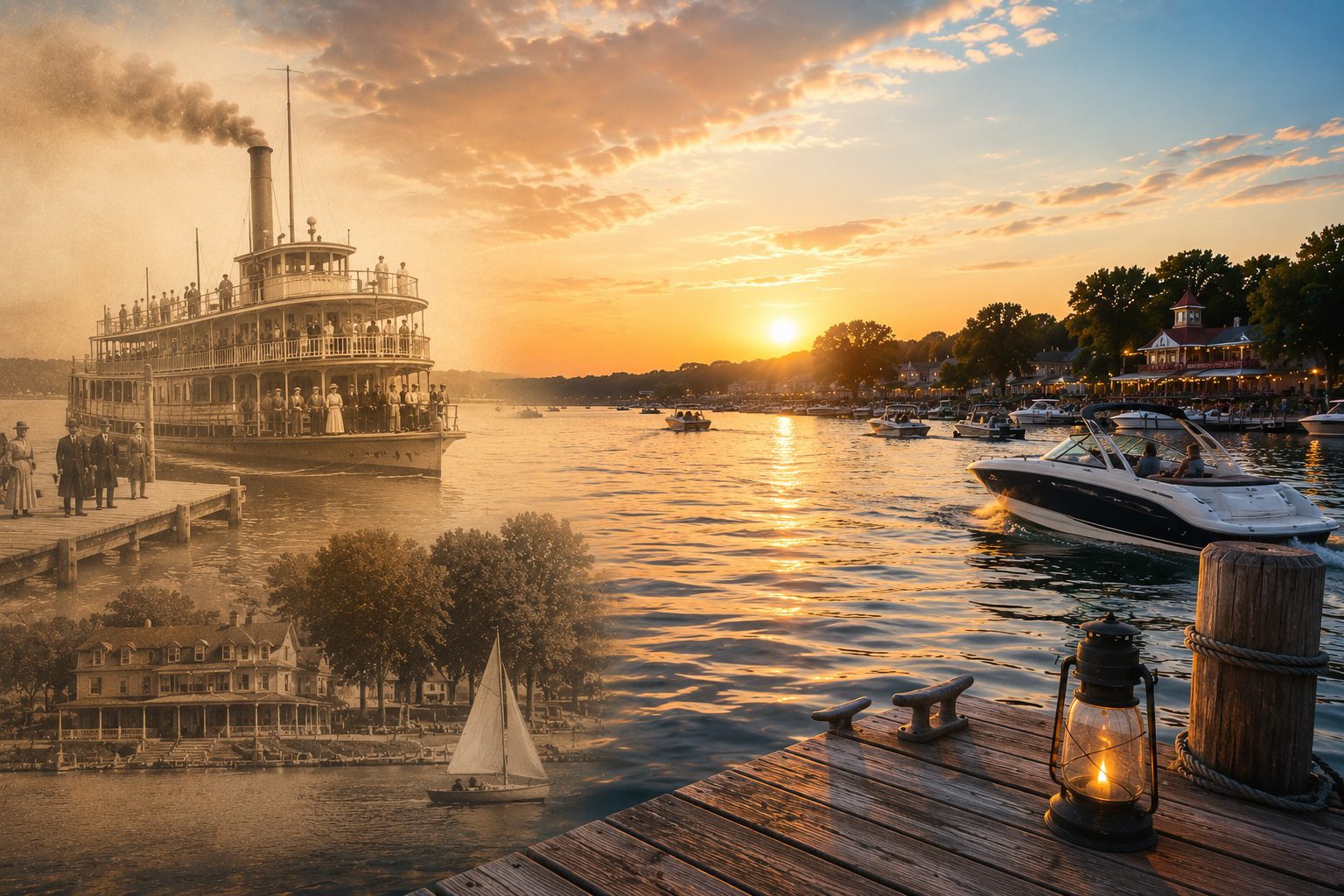
There are no smartphones. No wake boats. No vacation rental apps. Instead, visitors arrive by train, board a steamboat, and spend their days swimming, fishing, attending dances, and enjoying lakeside resorts. In many ways, the reasons people visited then are not much different from the reasons people visit today.
Steamboats, Resorts, and the Golden Age of the Lakes
As tourism grew, so did the infrastructure around the lakes.
Steamboats carried visitors between hotels, resorts, restaurants, and entertainment venues. Meanwhile, grand lakeside resorts welcomed guests looking to escape city life for a few days or even an entire summer.
In fact, Okoboji became known by some as the "Newport of the Midwest" because of its popularity among affluent travelers.
Although many of those original resorts have disappeared, their influence remains visible throughout the region. After all, tourism has been part of the local economy for well over a century.
Why Arnolds Park Still Matters Today
No discussion of Iowa Great Lakes history would be complete without mentioning Arnolds Park.
Established in 1889, it is one of the oldest amusement parks in the United States.
Over the decades, millions of visitors have ridden the rides, attended concerts, walked the boardwalk, and created family traditions around the park.
Furthermore, Arnolds Park serves as a bridge between the past and present. While the area continues to evolve, the park remains one of the most recognizable symbols of the Iowa Great Lakes.
Why Families Keep Coming Back
There are bigger lakes in the Midwest.
There are lakes with more shoreline, larger cities, and newer developments.
Yet people continue returning to Okoboji year after year.
Part of that comes from the water itself. However, much of it comes from tradition.
One generation introduces the next. Families return to favorite restaurants. Kids grow up and bring their own children back to the same beaches, trails, and lakefront attractions.
Because of that, Iowa Great Lakes history is not just something that happened in the past. It continues to be written every summer.
The Story Is Still Being Written
Today, visitors come for boating, fishing, beaches, concerts, trails, restaurants, and lake sunsets.
At the same time, the spirit of the area remains remarkably similar to what first attracted visitors more than a century ago.
People come here to slow down. To reconnect. To spend time with family and friends.
That is why the Iowa Great Lakes feel different from so many other destinations. The lakes are beautiful, of course. Yet the history, traditions, and memories layered beneath the surface are what truly make the area special.
And that story is still unfolding with every summer that passes.
Planning your own Iowa Great Lakes tradition?
Whether you're visiting for a long weekend or starting a new annual getaway, understanding the history of the area adds another layer to the experience. The Waterline Okoboji offers a convenient home base for exploring both the stories of the past and everything happening around the lakes today.