
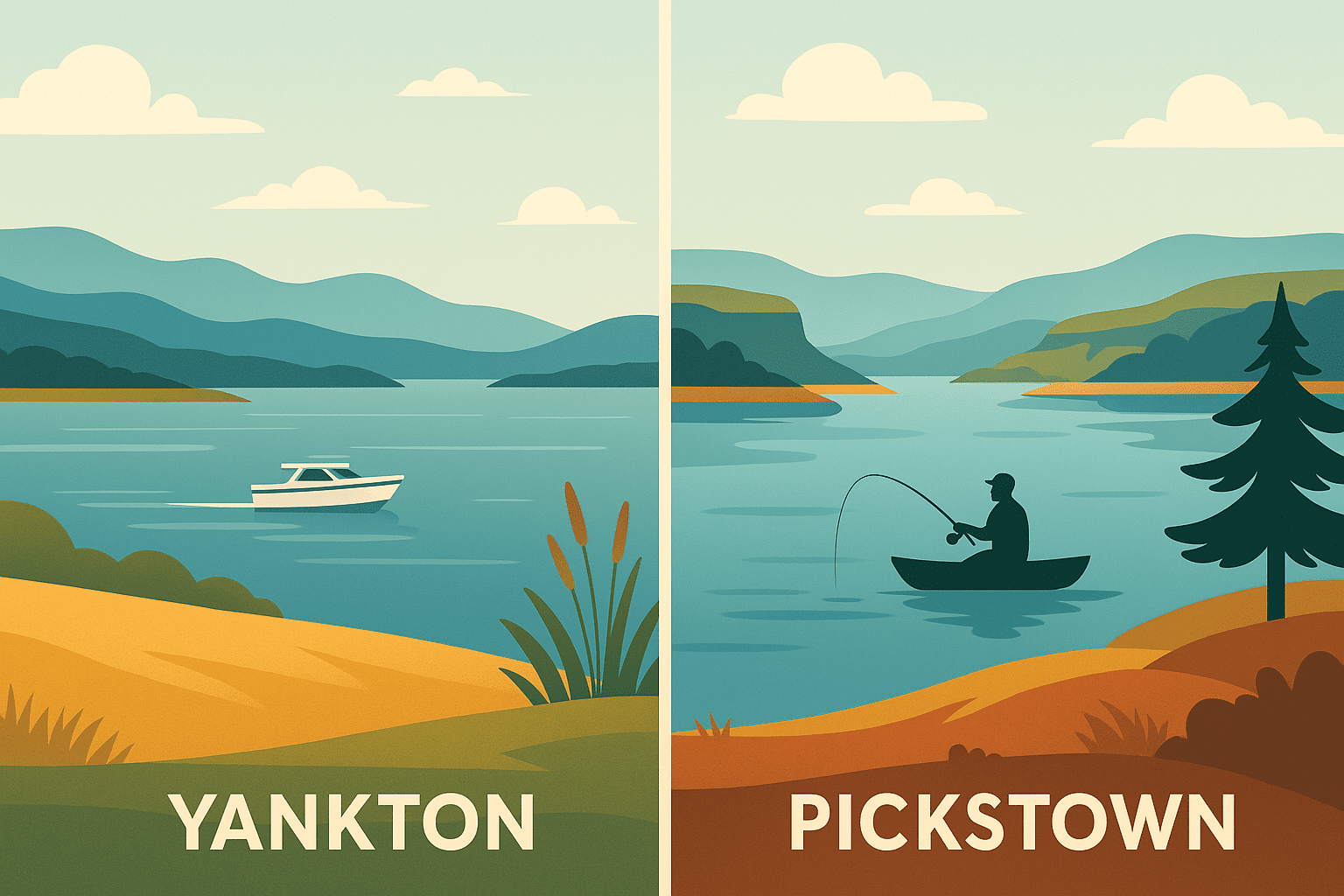
When comparing Midwest lake markets, Yankton vs Pickstown often becomes a key question for buyers exploring short-term rental opportunities. Both markets offer dependable demand, year-round recreation, and heavily regulated shorelines—meaning most homes are set back from the water. Understanding how each performs can help you choose the right location for investment.
Understanding These Lake Markets
Because Lewis & Clark Lake (near Yankton) and Lake Francis Case (near Pickstown) are state and federally managed reservoirs, shoreline development is limited. Homes tend to sit in established communities, bluffside neighborhoods, or areas with access to public ramps, marinas, and recreation zones. If you’re considering a property in either area, tools like the Lunigo Revenue Calculator can help you estimate potential returns based on location factors.
Market Overview: Yankton
Yankton attracts high visitation thanks to its vibrant mix of amenities—marinas, beaches, regional events, breweries, and outdoor activities. This broader appeal creates steady demand from spring through fall and draws a wider range of traveler types.
- Typical Guests: Families, weekend groups, anglers, road-trip travelers
- Strengths: Consistent seasonal traffic, family-friendly attractions, strong shoulder seasons
- Considerations: Higher competition, higher median property prices
Market Overview: Pickstown
Pickstown sits on Lake Francis Case, a region known for exceptional fishing and hunting. While the market sees less year-round traffic than Yankton, it draws longer stays and high-value guests, especially during walleye seasons and fall hunting periods.
- Typical Guests: Anglers, hunters, multi-day recreation groups
- Strengths: Strong ADR in peak seasons, longer average stays, limited competition
- Considerations: Seasonal demand swings, fewer entertainment and dining options
Performance Comparison
The difference between Yankton vs Pickstown becomes clearer when looking at occupancy trends, guest behavior, and ADR.
Occupancy
Yankton generally produces higher total occupancy because of its diverse tourism base. Pickstown, meanwhile, delivers exceptional occupancy during peak angling and hunting seasons.
ADR (Average Daily Rate)
Pickstown often outperforms during major fishing periods. Yankton tends to deliver more consistent ADR across spring, summer, and early fall due to its family and recreational appeal.
Seasonality
Yankton enjoys an extended tourism window—May through October—while Pickstown peaks heavily in early spring (walleye) and fall (hunting).
Which Market Performs Better?
The answer to Yankton vs Pickstown depends on your investment goals:
- Choose Yankton if you want broader tourism appeal, strong weekend demand, and more diverse guest types.
- Choose Pickstown if you prefer higher ADR potential during key seasons and a market with less competition.
Choosing the Right Property
Since neither market offers true waterfront homes, performance hinges on amenities, design quality, and how well a listing is positioned. Reviewing property features through a structured readiness lens—like the one outlined in the STR-Ready Criteria—can help you identify what guests value most in these lake markets.
Final Thoughts
Both locations offer strong potential for short-term rental owners. The key is aligning the property type with the guest market—steady summer travelers in Yankton or high-value seasonal guests in Pickstown. Subtle differences in traveler behavior, seasonality, and competition can influence long-term performance.
Thinking About Owning a Lake Property?
Get a free, data-backed STR evaluation for any property you're considering in Yankton or Pickstown. You'll see projected revenue, demand patterns, and customized recommendations.
Get Your Free Evaluation