
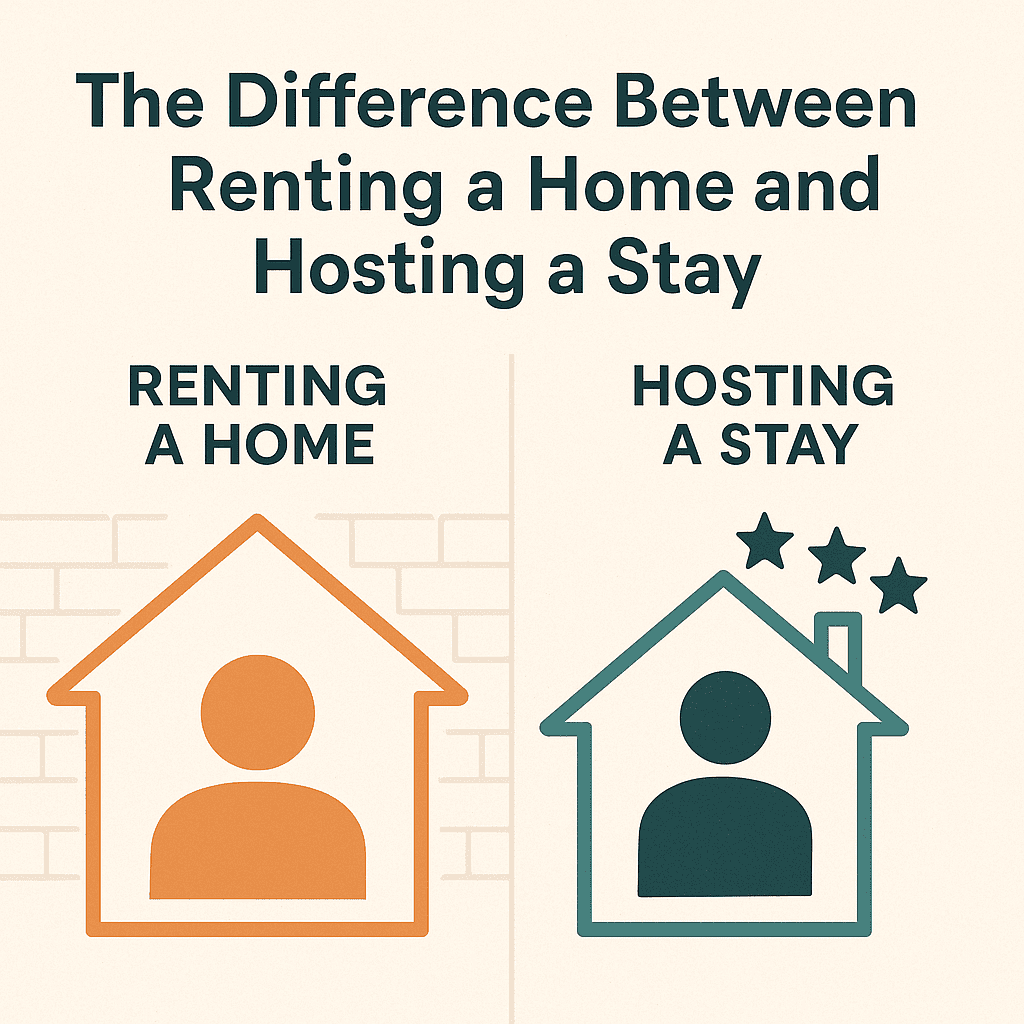
Renting a home and hosting a stay may sound similar, but they operate on two different models that impact revenue, flexibility, and the overall owner experience. Understanding these differences helps owners decide which path aligns with their lifestyle and long-term goals.
1. Renting a Home Creates Fixed Income — Hosting Creates Dynamic Income
Traditional renting a home provides predictable monthly payments, but your revenue is capped. You earn the same amount regardless of market demand, peak travel seasons, or local event surges. Hosting a stay, however, benefits from dynamic revenue. Tools like the Lunigo Revenue Calculator show how occupancy, seasonality, and nightly rates create significantly higher earning potential—especially in high-demand Midwest markets like Sioux Falls, the Black Hills, and Lake Poinsett.
2. Renting a Home Locks You Into Long Commitments
With long-term tenants, you’re tied to leases that limit flexibility. Hosting a stay offers more control. You can block off dates for personal use, adjust availability, and adapt to shifting life needs without breaking contracts or disrupting a tenant’s residency.
3. Renters Live in the Home Full-Time — Guests Stay Temporarily
When you are renting a home, tenants live there year-round, which results in higher wear and utility strain. In a hosting model, guests come and go, and professional turnover keeps the property in consistently maintained condition. Hosting also allows you to define clear expectations through house guidelines, reducing misunderstandings.
4. Renting a Home Limits Design Choices — Hosting Rewards Intentional Design
Long-term rentals are designed mainly for durability. Hosting gives you the opportunity to create a styled, purpose-built stay that attracts higher nightly rates. You can explore design resources like color psychology tools, local attractions, and Lunigo’s resource library to tailor the property to the guest experience without relying on major renovations.
5. Renting a Home Often Comes With Maintenance Delays
When tenants occupy a property full-time, maintenance issues can go unreported or escalate slowly. Hosting a stay operates on frequent cleaning cycles, which leads to early detection and proactive care. This protects your investment and reduces long-term repair costs.
6. Renting a Home Doesn’t Leverage Local Tourism
The demand for long-term tenants remains steady, but it doesn’t spike because of events like the Sturgis Motorcycle Rally, the Sioux Falls Premier Center schedule, or peak Black Hills travel. Hosting a stay aligns your property’s success directly with regional tourism. Listings benefit from major event-driven demand, especially when owners monitor local trends through tourism boards such as the South Dakota tourism site.
7. Hosting a Stay Provides Owners More Control
Long-term rentals come with strict landlord-tenant laws that dictate access rules, notice periods, and tenant rights. Hosting gives owners more operational and scheduling control without navigating complex long-term rental statutes. This model is ideal for vacation homes, cabins, and lake properties across the Midwest.
Thinking About Moving From Renting to Hosting?
Get a free evaluation to see how your property would perform as a short-term rental and whether hosting a stay is the right move for you.
Get Your STR Readiness Evaluation